Don’t Spoil the Fun
Let’s wind back the clock for a moment. It’s December 2019, and you have just stepped into a sold-out movie theater to watch Star Wars: The Rise of Skywalker, the hotly anticipated conclusion to Disney’s mainline Star Wars sequel trilogy. Just fifteen minutes into the movie, Oscar Isaac’s Poe Dameron pulls the rug on where this trilogy’s storyline is truly headed.
Somehow, Palpatine returned.
The rebels gasp. Rey and Leia share a worried glance. But you and the sold out crowd around you hardly react. Someone audibly groans. Not because this reveal completely upends two full movies of storytelling. No, this muted theater reaction comes instead from an audience that had already been clued in on the big reveal before they walked into the building.
Palpatine didn’t really return in Rise of Skywalker. He returned days earlier. In a Fortnite event. (In a live, in-game Star Wars crossover event, players heard Ian McDiarmid’s Palpatine deliver a “Day of the Sith” broadcast.)
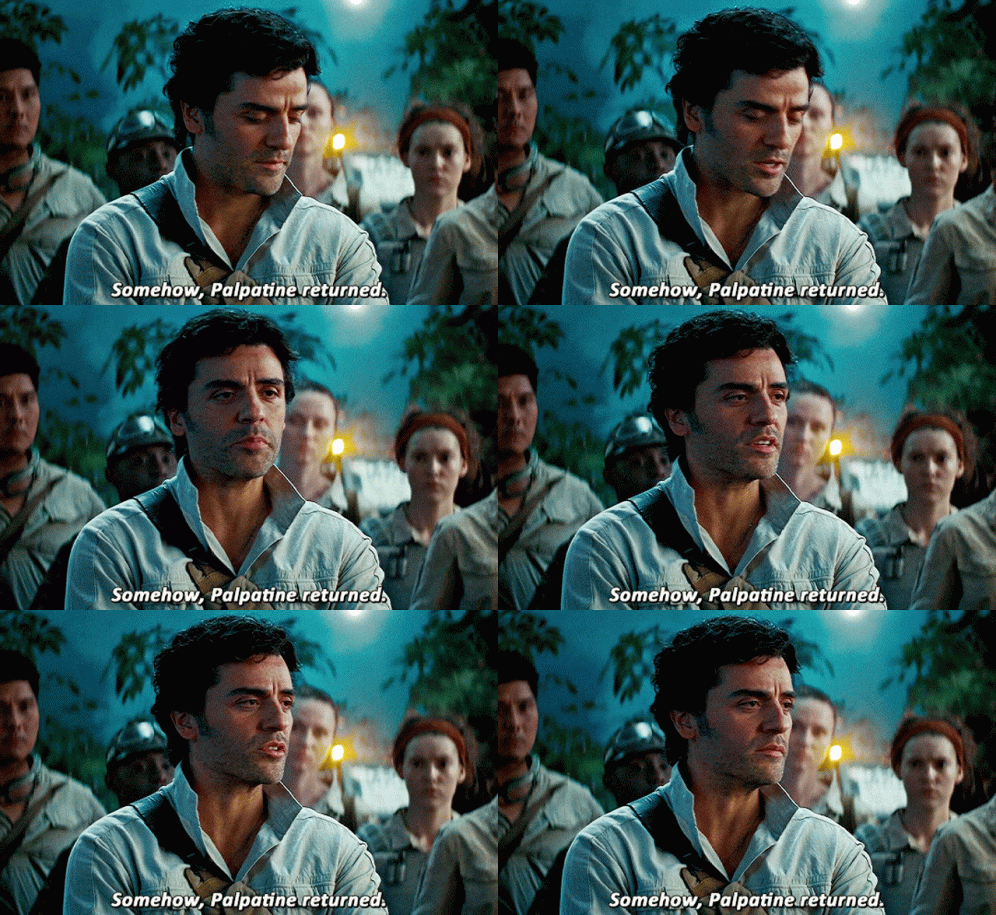
Oscar Isaac’s now infamously-exhausted delivery of this line quickly became a meme, poking at the absurdity of not just this 180º pivot for the maligned Disney trilogy arc, but at the broader ridiculousness of franchise storytelling at large.
Increasingly, audiences are exposed to storytelling that happens outside the movie theater. Connected, narrative campaigns have placed a greater emphasis on immersing audiences in the story ahead of release, relying on continually escalating audience interest to convert into box office receipts.
But audiences want to be entertained, surprised and delighted when they decide to get off their couch and pay to go see a film. And marketing that spends too much of the film’s storytelling and spectacle capital risks presenting audiences with a diluted experience for the theater itself — which then impacts word of mouth and rewatchability, a key box office driver for blockbusters aiming for the stratosphere.
Put another way: if a movie pulls a rabbit out of the hat in the campaign, it better have a killer trick up its sleeve for the show.
Take the Mission: Impossible franchise as a recent example. The seventh entry in the franchise, Dead Reckoning, kicked off its campaign with a mind-blowing 9-minute featurette detailing the production of the film’s (and perhaps the franchise’s) biggest stunt: the bike jump. It played in IMAX theaters ahead of Avatar: The Way of Water — nearly eight full months ahead of the film’s release.
There’s no doubt the stunt was among the most impressive in cinema history, but by the time the film arrived in theaters, audiences had seen the movie’s climactic moment — showcased in detail, both online and on the big screen — millions of times over.
It’s worth noting, Dead Reckoning faced a number of external headwinds — but the campaign’s decision to fully showcase its climactic stunt meant that one of the film’s most awe-inducing moments arrived in theaters already familiar to audiences.
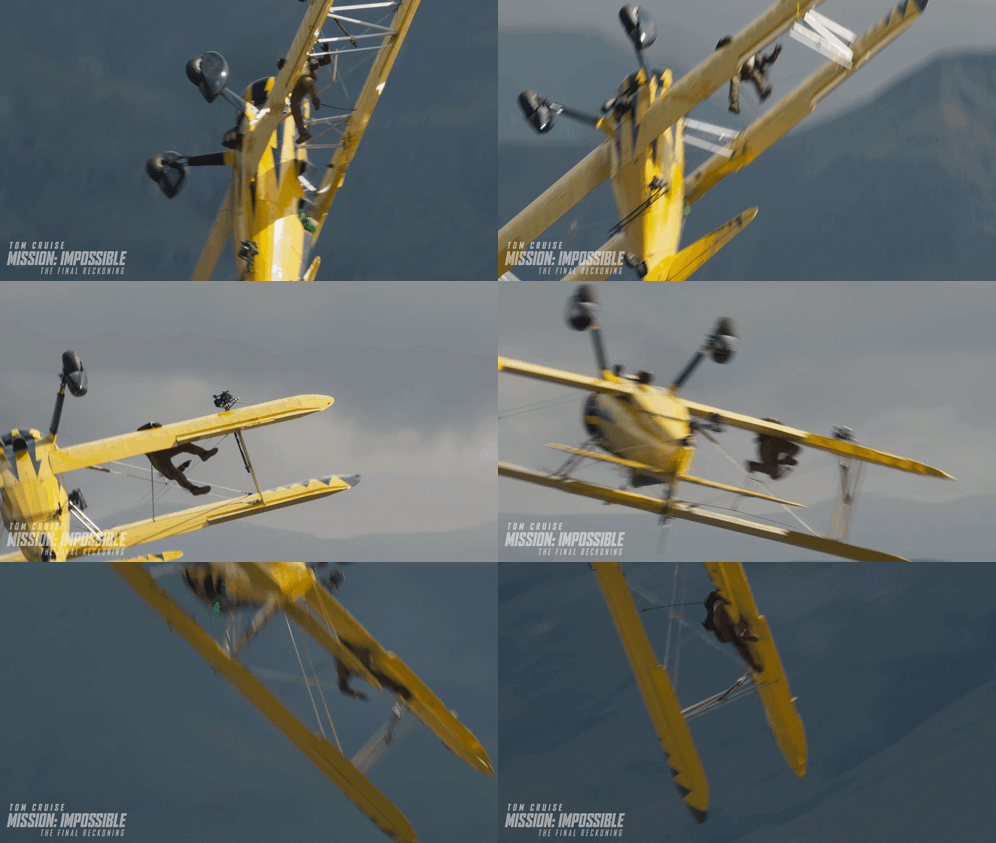
In marketing The Final Reckoning, the strategy for showcasing the film’s biggest set pieces changed. Strategically, the goal was to tease, rather than reveal and explain, some of the film’s biggest action moments. Rather than a full-length EPK, social content was built to provide glimpses of the action. Short snippets of behind-the-scenes details alluding to the stunts coupled with brief flashes of the finished scenes gave audiences a taste, while creators brought to set acted as word-of-mouth advocates to share that what audiences had seen was just the beginning.
The result? A new high-water mark for the franchise’s opening weekend — grossing approximately $64M domestically compared to Dead Reckoning’s $54.7M opening.
Strategic efforts to preserve elements for the theater experience have seen positive results across other genres too, perhaps most prominently in horror. Take Longlegs, Neon’s 2024 crime-thriller turned sadist-horror hit, or Robert Eggers’ Nosferatu, another standout 2024 horror release. Both centered their campaigns on teasing the ‘monster,’ leveraging a combination of trailer and digital tactics to heighten anticipation to a fever pitch, paying off the reveal in theaters.
In Longlegs’ case, the campaign deliberately avoided showing Nicolas Cage’s full transformation in marketing. For Nosferatu, multiple outlets reported the production’s intent to keep Count Orlok’s full look out of marketing until release.
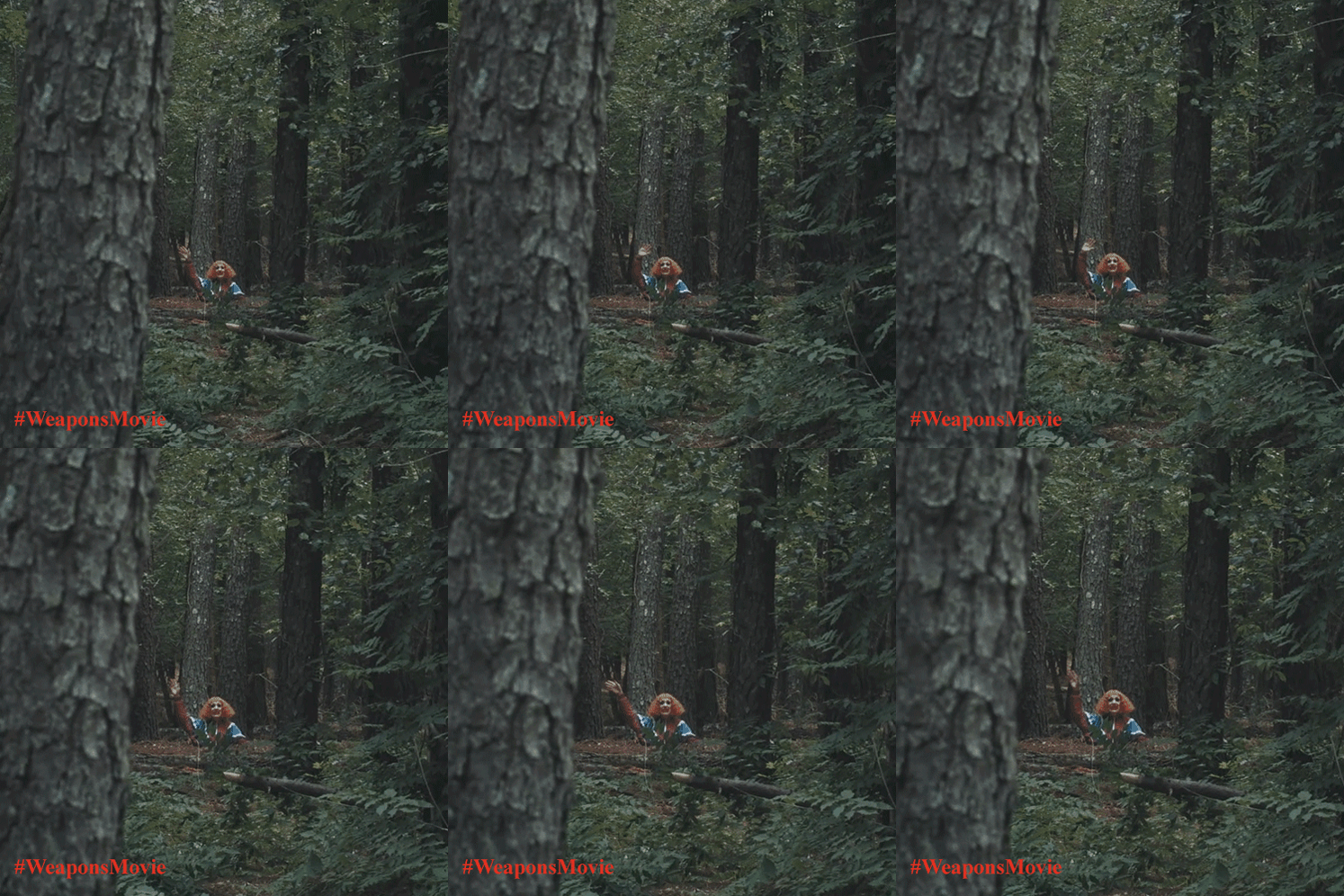
Warner Bros.’ 2025 hit Weapons took a similar approach to its campaign: building intrigue around the central mystery— a class full of missing children — while dialing up the creepy atmosphere through a unique blend of digital stunts and social teasers. Overnight horror icon Aunt Gladys hardly appeared in the campaign pre-release (save for a few short frames in the trailer), making way for a memorably haunting in-theater moment.
In March, Amy Madigan won a landmark supporting actress Oscar for her portrayal of Aunt Gladys — a testament not only to her singular performance, but the rush of experiencing it as a viewer.

And in case you thought this article was written in-and-for 2025 (it was), the trend continues in 2026 too. Look no further than Amazon/MGM’s Project Hail Mary, a $500M global sci-fi mega-hit whose most beloved character — no offense to Ryan Gosling — never appeared in the film’s marketing.
Ultimately, strategy has to define the lines between what to highlight and what to preserve when it comes to campaign creative — and a strategy reliant on withholding aspects of the film isn’t necessarily right for every title. Take a world-stopping musical like Wicked: it was primed to ignite a breakthrough cultural moment, and Cynthia Erivo and Ariana Grande belting “Defying Gravity” is the perfect spark.
But for films where part of the entertainment promise comes from the element of surprise — jaw-dropping action setpieces and spine-shivering horror reveals are good examples — it becomes increasingly important to tactically hold back certain aspects for audiences to experience in the theater.
Understanding the aspects of a film that will make for truly unforgettable theatrical moments and being precious with them goes further than just a strong opening weekend. Audiences who leave the theater happy are more likely to become advocates for the film or come back to relive the experience again.
The most effective campaigns don’t simply drive social views — they promise an incredible experience at the movie theater.
Just don’t spoil all the fun in the campaign.